Deer Tallow: How to Render It and What It's Good For
Reader-supportedHunter's guide to deer tallow: how to render venison fat at home, why yield is lower than beef, and 6 practical uses from pemmican to leather conditioning.

This post contains affiliate links. We may earn a commission if you purchase through these links, at no extra cost to you.
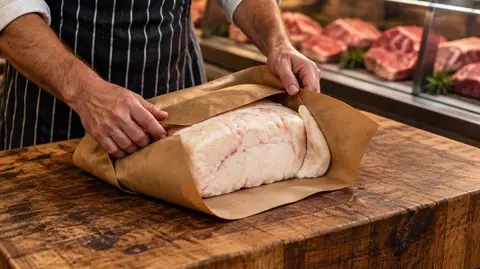
I am not a hunter. I want to say that up front. But I have rendered enough deer fat to know what works, because two of my closest friends in central Texas drop off bags of venison trim every November and tell me to figure out what to do with it. The first year I tossed most of it. The second year I learned to render it. The third year I learned why so much hunter folklore about deer fat is wrong.
Deer tallow is harder to render than beef. The yield is lower. The melt point is higher. The smell is stronger. If you are coming to deer fat expecting it to work like beef tallow, you will be frustrated. If you come to it understanding what it actually is, it earns its place in your shop.
This guide is for hunters, homesteaders, and anyone who has been handed a freezer bag full of venison trimmings and asked themselves what they were going to do with it.
Why Deer Fat Is Different From Beef Fat
Three things matter.
Deer is leaner. A field-dressed white-tail buck typically carries 3 to 5 percent body fat. A grass-fed beef steer at harvest carries 18 to 25 percent. That math means the volume of fat you can collect from a deer carcass is small compared to a beef carcass, even before rendering yield losses.
Deer fat has a higher melt point. Beef tallow softens around 95 to 110°F. Deer tallow stays solid until 115 to 125°F. On your skin, deer tallow does not melt. In your mouth, deer tallow leaves a waxy mouthfeel that most people find unpleasant. This is why it is rarely used as a cooking fat in the way beef tallow is.
Deer fat oxidizes faster. The fatty acid composition includes more unsaturated fats than beef, which makes deer tallow go rancid faster at room temperature. Properly rendered and sealed, it will last 6 to 9 months. Beef tallow under the same conditions will last 12 to 18.
These three facts shape every use case below. Deer tallow is not a worse beef tallow. It is a different ingredient with different jobs.
How to Render Deer Tallow at Home
The method is similar to beef tallow but with a few adjustments. I covered the general process in the deer tallow page, and here is the practical version.
Step 1: Trim aggressively.
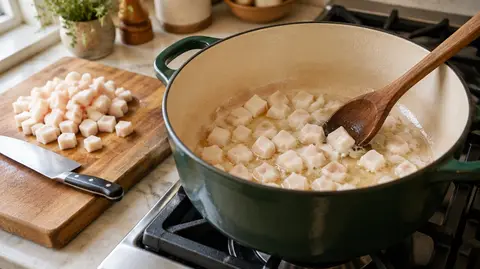
Separate the white fat from any muscle, silver skin, connective tissue, and gristle. The cleaner the fat going into the pot, the cleaner the tallow coming out. Every bit of muscle that goes in produces a gamier final product. Spend 30 minutes on this step. It is the difference between usable tallow and a jar that smells like a wet deer.
Step 2: Grind or cube small.
Run the trimmed fat through a meat grinder with a coarse plate, or cube it to roughly 1/4-inch pieces with a knife. Smaller pieces render faster and more completely.
Step 3: Wet render for first pass.
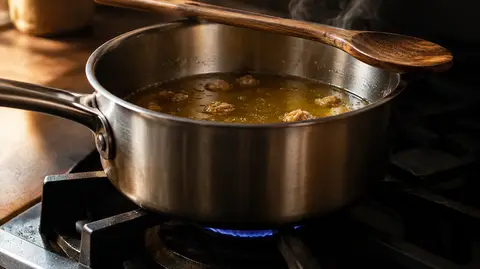
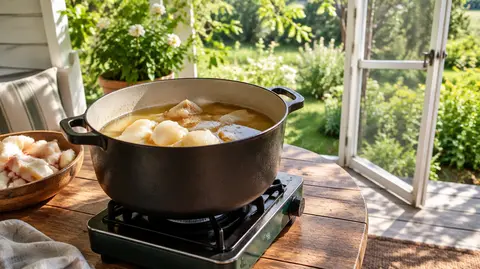
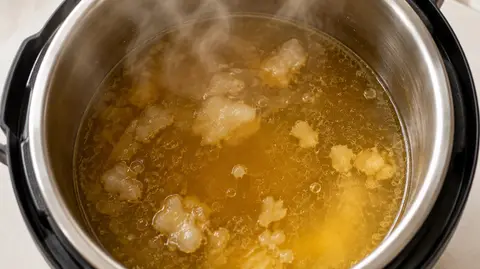
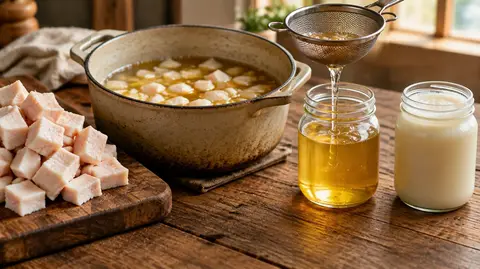
Place the fat in a heavy stockpot with 1 cup of water per 4 pounds of fat. Heat over low (around 200°F internal). The water keeps the temperature stable and prevents scorching in the early phase. As the fat melts, the water boils off. This phase takes 2 to 4 hours depending on volume.
Step 4: Switch to dry render after water cooks off.
Once the water has fully evaporated (you will hear the popping stop), reduce the heat to a low simmer. The remaining fat tissue will slowly release its remaining oil. Keep the temperature below 250°F. Stir occasionally to prevent sticking.
Step 5: Strain through cheesecloth.
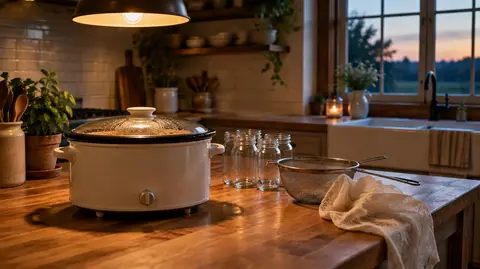
When the cracklings have shrunk and turned amber-brown and most of the liquid fat has been released, ladle the rendered fat through several layers of cheesecloth into clean glass jars. Strain twice if you want maximum clarity.
Step 6: Cool and seal.
Let the jars cool to room temperature uncovered, then cap. Store in the refrigerator for indefinite shelf life or in a cool dark cabinet for 6 to 9 months.
Expected yield: 20 to 30 percent. A 5 lb bag of trim usually gives me about 1 to 1.5 pounds of finished tallow. Beef trim under the same conditions runs 50 to 65 percent yield. This is the math hunters need to know going in.
Use 1: Pemmican Binder
This is the original use case and the one that still makes the most sense.
Pemmican is a Native American preservation technique that mixes dried lean meat (usually venison, bison, or beef) with rendered fat into a dense, shelf-stable bar. The fat acts as a binder and a preservative. The high melt point of deer tallow is a feature here, not a bug. The finished pemmican stays solid even in summer hunting camps.
Standard ratio is roughly 1:1 dried meat to rendered fat by weight, with optional dried berries (cranberry, cherry, or saskatoon) mixed in for both calories and flavor. Mix while the fat is warm and pliable, press into molds or wrap in parchment, store in a cool dark place.
A properly made pemmican block lasts months at room temperature and years if frozen. It is the closest thing to a survival ration that pre-industrial North America produced.
Use 2: Candle Making
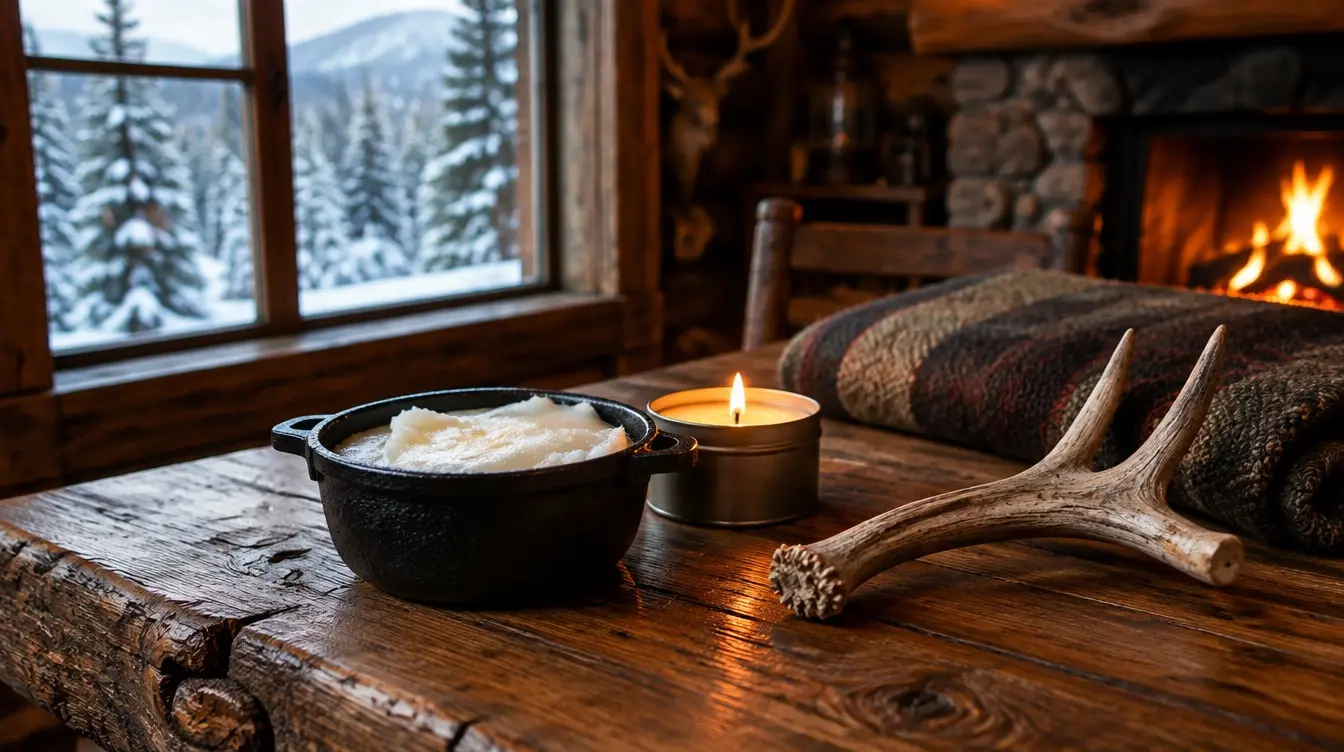
Deer tallow makes a slow-burning candle with very little smoke once cured. The high melt point means the candle holds its shape on a hot windowsill where a beef tallow candle would slump.
The method is the same as the beef tallow candle making guide. Render, cool slightly, pour into a candle vessel with a pre-anchored wick, let cool fully. Cotton or hemp wicks work best. Avoid metal-core wicks (some of which are still made with zinc).
A 4 oz jar candle made from deer tallow will burn for 20 to 30 hours and produce minimal soot. The faint smell is not floral, but it is not unpleasant either. Most people describe it as warm and slightly waxy.
Use 3: Soap Making
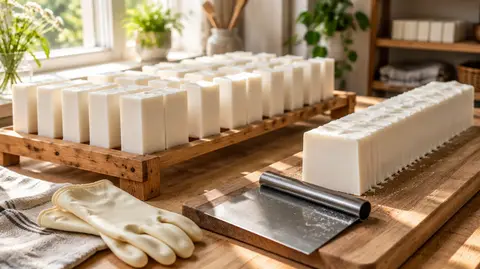
Deer tallow soaps up beautifully. The high stearic acid content gives you a hard bar with stable lather and excellent moisturizing properties.
The SAP value for deer tallow is similar to beef tallow at roughly 0.141 for NaOH (sodium hydroxide, used for hard bar soap) and 0.198 for KOH (potassium hydroxide, used for liquid soap). Most recipes calibrated for beef tallow will work with deer tallow substituted at a 1:1 ratio.
The general workflow is covered in the homemade soaps and balms overview. The only real difference with deer tallow is the slightly stronger natural smell that may carry through into the unscented finished bar. A heavier essential oil load (1 oz per pound of oils instead of the standard 0.5 oz) usually masks it without affecting bar quality.
Use 4: Leather Conditioning
This is where deer tallow genuinely shines. The high melt point that makes it inferior for skincare is exactly what you want in a leather conditioner. The tallow penetrates the fibers, fills voids, and stays in place rather than weeping back out in summer heat.
I have used deer tallow on a saddle, a pair of work boots, and a leather jacket lining. The boots and the saddle were spectacular. The jacket I would not do again because the smell, while faint, lingered in close contact with my clothes for a couple weeks before fully airing out.
Method: warm a small amount of tallow until barely soft (do not melt to liquid). Apply with a clean cloth in small circular motions. Let it absorb for 4 to 6 hours. Buff off any excess with a clean cloth. Repeat if the leather is very dry.
Deer tallow is what I would actually use to recondition a hunting saddle or pair of leather boots. For everyday leather goods I would lean beef tallow because of smell. The general tallow leather method is covered in /tallow/deer/ and the broader leather conditioner DIY method applies the same way.
Use 5: Skin (Sort Of)
I want to be careful with this section because deer tallow on skin is a real use case but it is not the same as beef tallow on skin.
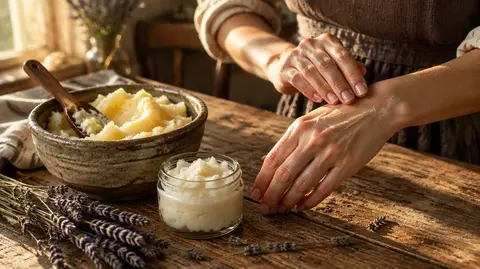
The high melt point means deer tallow does not absorb into skin the way beef tallow does. It sits on top as an occlusive layer. That property is genuinely useful for cracked winter hands, weather-exposed face skin, and chapped lips, because the occlusive layer holds moisture in. It is not useful for daily moisturizing on normal skin, because it does not soak in.
If you want to try deer tallow as skincare, mix it with a softer oil to bring the melt point down. Two parts deer tallow to one part olive or jojoba oil, gently melted together and cooled, gives you a balm that behaves more like the beef tallow balms most people are familiar with.
For most skincare use I would still reach for a proper beef tallow balm. The Vanman’s Tallow Balm is the heavy commercial formula I keep on hand for cracked-skin emergencies and it is what I would recommend before trying to make a deer-fat moisturizer. For everyday face and body, the Amallow Unscented Whipped Tallow Balm is far easier to work with. If you want to build your own balm from scratch with rendered fat, the tallow balm DIY recipe walks through the ratios that actually work.
Use 6: Cooking (Limited)
Most people who try cooking with deer tallow once never try again. The high melt point and waxy mouthfeel make it unpleasant in most direct applications.
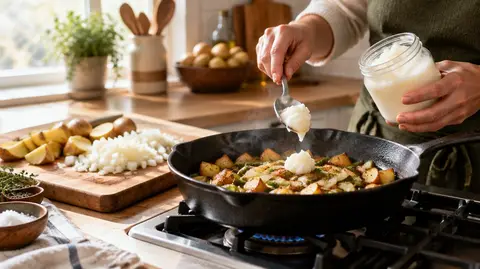
The exception is high-heat searing where the tallow burns off the food anyway. A cast iron pan with a tablespoon of deer tallow heated to 400°F gives you an excellent searing medium for venison backstrap. The fat does not transfer to the meat in any meaningful quantity, and it imparts a subtle game-friendly flavor that complements rather than competes.
For roasting vegetables, frying, or any application where the fat stays in contact with food at lower temperatures, use beef tallow instead. The smoke point guide covers temperature behavior for beef tallow specifically, but the principles apply broadly.
Why Hunters Save Fat (Even When They Do Not Plan To Use It)
Three reasons I hear consistently.
Pemmican tradition. Hunters who grew up reading Mark of the Grizzly or Eastman’s Hunting Journal know about pemmican and want to try it. Even if they never make it, they save the fat believing they might.
Soap and candle hobby crossover. Hunters tend to overlap with homesteading and rural self-sufficiency interests. Soap and candle making are natural extensions, and rendering deer fat for those projects is a way to use the whole animal.
Whole-animal ethic. This is the one that resonates with me. A hunter who works hard to take an animal cleanly often feels strongly about not wasting parts of it. The fat goes into the freezer with that intention, even when the actual project doesn’t materialize. I respect the impulse, but I would also gently suggest that if it sits in the freezer for two years untouched, you might be better off donating it to someone who will render it.
If you have deer fat in the freezer right now and no immediate plan for it, render it. Once it is in a jar in your pantry, you will find uses for it. The unrendered trim in a freezer bag will eventually freezer-burn and oxidize past usefulness.
Frequently Asked Questions
Can I mix deer fat and beef fat when rendering?
Yes, and it actually solves several of the problems with pure deer tallow. A 50/50 blend has a lower melt point, milder smell, and better mouthfeel than pure deer. This is the practical move for hunters who also process their own beef or who buy grass-fed tallow.
Does deer tallow smell strong?
Properly rendered from clean trim, the smell is mild. Improperly rendered (with muscle or silver skin contamination, or rendered too hot) the smell can be pronounced and gamey. The single biggest variable is the trim quality going in.
How long does deer tallow last?
Refrigerated, basically indefinitely. Sealed at cool room temperature, 6 to 9 months. Open at room temperature, 3 to 4 months before it starts turning. Less stable than beef tallow.
Can I use deer tallow for seasoning cast iron?
Technically yes, but the high melt point and slight gaminess make it less ideal than beef tallow for this. Use beef tallow for cast iron seasoning (the cast iron seasoning guide walks through it) and save deer tallow for projects where the properties matter.
What is the difference between deer tallow and venison tallow?
They are the same thing. “Venison” historically referred to meat from any large game animal (deer, elk, moose, antelope) but in modern usage is synonymous with deer meat in North America. Venison tallow and deer tallow are interchangeable terms.
Can I render deer tallow in a slow cooker?
Yes, and it is the easiest method for small batches. Cube the trim small, place in the slow cooker on low with a quarter cup of water, leave overnight. Strain in the morning. You will get a slightly less-clear final product than stovetop rendering but the process is forgiving and almost impossible to mess up.
Bottom Line
Deer tallow is a niche product with specific best-uses. Pemmican binder, candles, soap, leather conditioning, and the occasional cracked-skin balm if blended with a softer oil. It is not a good substitute for beef tallow in cooking or daily skincare.
If you are a hunter or you have access to deer fat, render it cleanly and find a project that matches its properties. Do not try to force it into beef-tallow use cases.
For everyday tallow needs, beef is the better starting point. The 100% Pure Grass-Fed Beef Tallow covers cooking and skincare without any of the deer-tallow tradeoffs. Keep your rendered deer tallow for the projects where its higher melt point and harder finish actually earn their place.
Explore more tallow guides
Browse our collection of recipes, comparisons, reviews and DIY tutorials.
View all guidesKing Tallow is reader-supported. We research and test the products we recommend, and when you buy through links on this page we may earn a commission at no extra cost to you. See our affiliate disclosure.
Published