Beef Tallow vs Lard: Key Differences for Cooking, Baking, and Frying
Independent reviewBeef tallow vs lard compared: beef fat vs pork fat, smoke point, flavor, nutrition, pie crust and frying results, storage, cost, and which one to keep on hand.

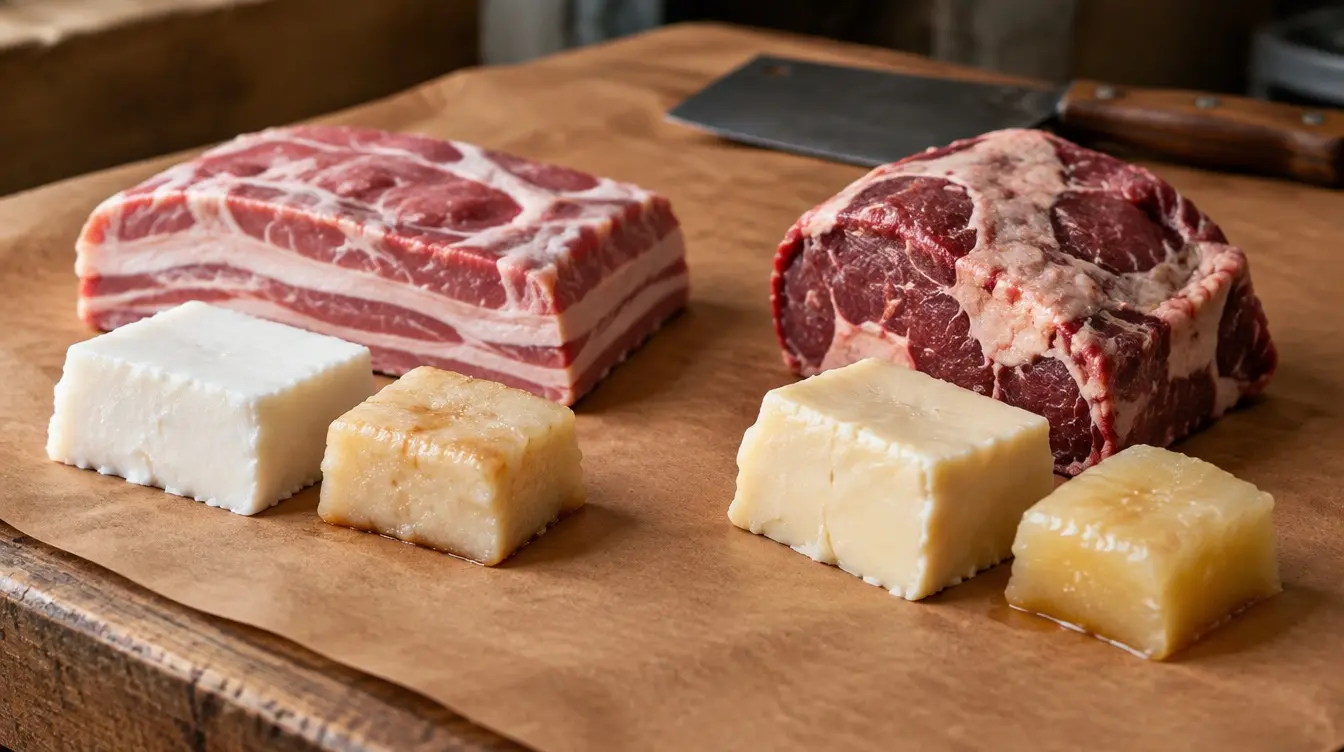
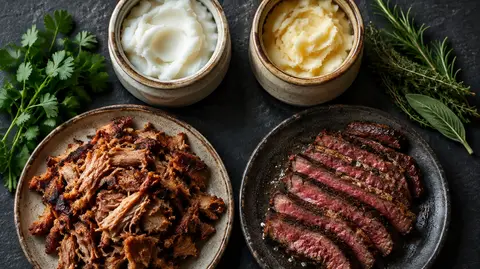
Beef tallow is rendered beef fat; lard is rendered pork fat. Tallow is firmer, more saturated, has a higher smoke point (about 400-420°F vs about 370°F for lard), and tastes faintly beefy, which makes it the better choice for deep frying and searing. Lard is softer, milder, and higher in unsaturated fat, which makes it the traditional choice for flaky pie crust, biscuits, tortillas, and tamales.
We test and research the products we recommend. If you buy through our links, we may earn a commission at no extra cost to you.
Beef Tallow vs Lard: Comparison Table
| Beef tallow | Pork lard | |
|---|---|---|
| Source | Rendered beef fat (best from suet around the kidneys) | Rendered pork fat (leaf fat around the kidneys, or back fat) |
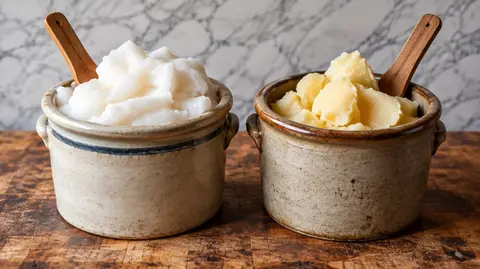
| Texture at room temperature | Firm, slightly waxy | Soft, creamy, spreadable |
| Melting range | About 104-113°F (40-45°C) | About 86-104°F (30-40°C) |
| Smoke point | About 400-420°F | About 370°F (leaf lard a bit higher) |
| Saturated / mono / poly fat (approx. % of fat) | 50 / 42 / 4 | 39 / 45 / 11 |
| Flavor | Mildly beefy, savory | Mild; leaf lard is nearly neutral |
| Best for | Deep frying, french fries, searing, roasting, savory pies | Pie crust, biscuits, tortillas, tamales, refried beans |
| Room-temperature storage | Months, sealed and dark | Shorter; refrigerate for long storage |
Fatty acid values are approximate, from USDA FoodData Central entries for beef tallow and lard. Smoke points vary with how cleanly the fat was rendered and filtered.
Are Lard and Tallow the Same Thing?
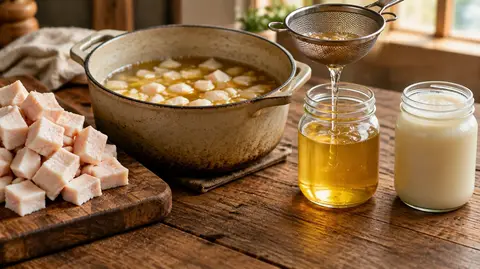
No. Both are rendered animal fats made the same way, by slowly melting raw fat and straining out the solids. The animal is what differs:
- Tallow comes from cattle (sheep and goat fat are also called tallow). The highest grade comes from suet, the hard fat around the kidneys and loins.
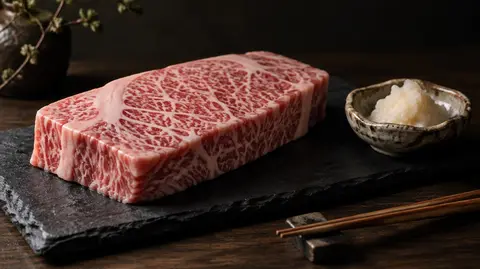
- Lard comes from pigs. Leaf lard, from the soft fat around the pig’s kidneys, is the mildest and most prized for baking. Back fat lard has a bit more pork flavor.
Is lard beef fat?
No. Lard is always pork fat. Rendered beef fat is tallow. You will sometimes see “beef lard” in recipes or on older labels; it almost always means beef tallow or beef dripping. Some sellers also label rendered pork fat as “pork tallow”; pork tallow vs beef tallow explains that naming. For beef fat that still carries roast juices, see beef dripping vs beef tallow.
Pork Fat vs Beef Fat: Why They Behave Differently
The practical differences between the two fats come from their fatty acid makeup. Per 100 g of fat, roughly:
| Fatty acid | Beef tallow | Pork lard |
|---|---|---|
| Palmitic (saturated) | 25-26% | 24% |
| Stearic (saturated) | 14-19% | 11-13% |
| Oleic (monounsaturated) | 36-42% | 41-44% |
| Linoleic (polyunsaturated) | 3% | 10% |
Two things stand out:
- Tallow has more stearic acid, which is why it is harder and melts at a higher temperature. Stearic acid is also the saturated fat with the most neutral effect on LDL cholesterol in research to date.
- Lard has roughly three times the polyunsaturated fat, mostly linoleic acid. Polyunsaturated fats oxidize faster under heat, so lard breaks down sooner during long frying and has a shorter shelf life. That softer, more unsaturated fat is also why lard stays pliable when cold and works well in pastry.
The animal’s diet shifts both profiles. Grass-fed tallow tends to carry more CLA and a lower omega-6 to omega-3 ratio (grass-fed vs grain-fed tallow). Lard from pigs fed high-linoleic diets (corn, soy) is higher in polyunsaturated fat than lard from pastured pigs. For the full breakdown of tallow’s fats, see the beef tallow fatty acid profile.
Tallow vs Lard for Cooking
Smoke point and frying
Tallow smokes at about 400-420°F and lard at about 370°F. Deep frying runs at 350-375°F, so both can do it, but tallow has more headroom when cold food drops the oil temperature and you turn the heat up to recover. Its lower polyunsaturated content also means it holds up over more reuse cycles before it darkens and tastes stale.
Tallow is the better frying fat for french fries, fried chicken, onion rings, and anything reused over several fry sessions. See the beef tallow smoke point and temperature guide for temperatures by method, and best beef tallow for deep frying for bulk options.
Lard is a fine choice for fish, seafood, and delicate vegetables, where its milder flavor lets the food lead.
Searing and roasting
Both work at typical roasting temperatures (375-425°F). Tallow gives beef, potatoes, and root vegetables a deeper savory flavor and holds up better for a hard sear in cast iron. Lard suits pork, apples, squash, and dishes where you want the fat to disappear.
Flavor
Tallow tastes mildly beefy, more so when dry-rendered at higher heat and less when wet-rendered or deodorized. Lard is milder; good leaf lard is close to neutral. If you want your food to taste more like beef, use tallow. If you want the fat to stay in the background, use lard.
Tallow vs Lard for Baking
Lard is the traditional baking fat for good reason:
- Pie crust: lard makes tender, very flaky crust. It stays plastic at fridge temperature and forms coarse fat crystals that separate into layers in the oven. Many bakers blend leaf lard with butter for flavor.
- Biscuits: cold lard cut into flour gives tender, high-rising biscuits.
- Flour tortillas and tamales: both depend on lard for texture.
Tallow can bake, but results differ:
- Tallow crusts are sturdier and slightly drier. That works well for meat pies, pasties, and tourtière, where the crust must hold a wet filling. See the beef tallow pie crust recipe.
- Tallow biscuits come out a little denser.
- In sweet baking, butter is usually the better choice than either animal fat.
Nutrition: Beef Tallow vs Pork Lard
Per tablespoon (about 12.8 g), from USDA FoodData Central, rounded:
| Beef tallow | Lard | |
|---|---|---|
| Calories | 115 | 115 |
| Total fat | 12.8 g | 12.8 g |
| Saturated | 6.4 g | 5.0 g |
| Monounsaturated | 5.4 g | 5.8 g |
| Polyunsaturated | 0.5 g | 1.4 g |
| Cholesterol | 14 mg | 12 mg |
The day-to-day nutritional difference is small. Lard has somewhat less saturated fat than tallow (and less than butter or coconut oil), while tallow is more stable under heat. Neither is clearly “healthier.” How the animal was raised, and what the rest of your diet looks like, matter more. Mainstream guidelines still recommend limiting saturated fat; for how the research has evolved, see is beef tallow healthy?
Storage and Shelf Life
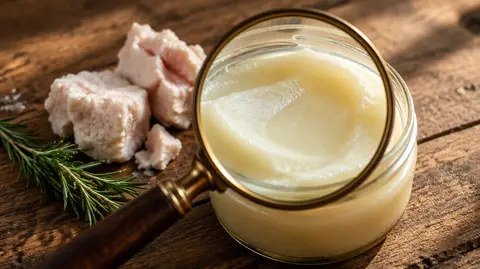
Tallow is the more shelf-stable of the two because it has less polyunsaturated fat to oxidize. Sealed in a clean jar away from light, tallow keeps for months at room temperature and a year or more refrigerated. Lard is better kept in the refrigerator (about 6 months) or freezer (a year or more). Rancid fat of either kind smells sour, stale, or like crayons or paint. See how to store beef tallow and does beef tallow go bad?
Cost and Where to Buy
Raw fat from a butcher is the cheapest route for both. Ask for beef suet or kidney fat for tallow, and pork leaf fat for lard; many butchers sell it for little. Commercial lard is widely stocked in grocery stores and is usually cheaper than rendered tallow. Grass-fed tallow and pastured leaf lard cost more.
To make your own, follow the step-by-step guide to rendering beef tallow. The same method works for pork fat; lard renders a little faster because it melts at a lower temperature. If you would rather buy tallow ready-made, the 100% Pure Grass-Fed Beef Tallow 4 lb tub is the bulk option for frying, Fatworks Grass-Fed Beef Tallow is a smaller jar, and Traverse Bay 32 oz is a deodorized, lower-flavor option.
Lard or Tallow: Which to Keep on Hand
- If you mostly fry, sear, and roast: tallow.
- If you mostly bake pies, biscuits, and tortillas: lard.
- If you do both: keep both. Tallow for high heat and savory cooking, a smaller jar of leaf lard for pastry.
Use tallow for: pan-seared steak, smash burgers, tallow french fries, roasted potatoes, fried eggs, Yorkshire pudding, hash browns, meat pies.
Use lard for: buttermilk biscuits, sweet pie crust, flour tortillas, carnitas, tamales, refried beans, old-fashioned doughnuts.
Either works for: sautéed greens, pan-fried chicken, roasted Brussels sprouts, general stovetop cooking.
Frequently Asked Questions
Can I substitute tallow for lard 1:1?
Yes, by weight, for frying, sautéing, and roasting. In pie crust, biscuits, and tortillas, the swap still works, but the texture will be firmer and the flavor more savory.
Which is better for deep frying, lard or tallow?
Tallow. It has a higher smoke point, less polyunsaturated fat, and holds up over more reuse cycles.
Which is better for pie crust?
Lard, especially leaf lard, for sweet pies. Tallow works well for savory meat pies.
Is beef tallow healthier than lard?
They are close. Lard has less saturated fat; tallow has less polyunsaturated fat and is more heat-stable. Neither is a clear winner nutritionally.
Where does suet fit in?
Suet is the raw, unrendered hard fat from around a cow’s kidneys. Rendering suet gives the highest grade of tallow. See beef suet vs beef tallow and the types of beef tallow.
How do tallow and lard compare to butter?
Butter contains water and milk solids, so it smokes much earlier (about 300-350°F). See beef tallow vs butter.
Further reading
Explore more tallow guides
Browse our collection of recipes, comparisons, reviews and DIY tutorials.
View all guidesKing Tallow is reader-supported. We research and test the products we recommend, and when you buy through links on this page we may earn a commission at no extra cost to you. See our affiliate disclosure.
Published · Last updated