Is Beef Tallow Good for Seasoning Cast Iron? Best Tallow and Method
Independent reviewYes, beef tallow can season cast iron. How it compares with flaxseed, Crisco, and lard, the best tallow to buy, and a step-by-step oven seasoning method.

Bottom line: Yes, beef tallow is good for seasoning cast iron. Wiped on in very thin coats and baked at about 450°F, it bakes into a hard, slick layer, and cooking with it keeps building that seasoning. It builds a little more slowly than highly unsaturated oils like flaxseed, but the layer it produces is durable and not brittle. For a supply you can both cook with and season with, the 100% Pure Grass Fed Beef Tallow (4 lbs) is our pick; a Fatworks 14 oz jar is plenty if you only own a pan or two.
We test and research the products we recommend. If you buy through our links, we may earn a commission at no extra cost to you.
I own nine cast iron skillets, two Dutch ovens, and a griddle. Every single one has been seasoned with beef tallow, and I have tried enough different fats over the years — flaxseed oil, Crisco, lard, canola — to know that tallow produces the most durable, most forgiving seasoning layer for everyday cooking.
This guide covers why tallow works so well for cast iron, which brands I have tested and recommend, and a complete step-by-step seasoning method that will give you a slick, non-stick surface after just a few rounds.
Why Beef Tallow Works for Seasoning Cast Iron
Seasoning is not about “coating” your pan in fat. It is a chemical process called polymerization — fat molecules bond to the iron surface and to each other, creating a hard, plastic-like layer that is physically attached to the metal.
For polymerization to work well, you need a fat that hits three criteria. Tallow nails all three.
It gets hot enough to polymerize
Polymerization happens when a thin film of fat is heated past its smoke point. Tallow’s smoke point sits around 400°F, so at a seasoning temperature of 450°F to 475°F you are above the point where the fat breaks down and bonds to the iron. Butter, by contrast, contains milk solids that burn before it polymerizes cleanly.
Its fat mix trades speed for durability
The part of a fat that polymerizes is mostly its unsaturated fatty acids. Flaxseed oil is very unsaturated, so it builds a glassy layer quickly, but many cooks find that layer brittle and prone to flaking. Tallow is roughly half saturated and about 40% monounsaturated, so each coat is a little thinner and it takes more coats to build up. What you get is a layer that holds up well to everyday cooking. I learned the flaxseed lesson the hard way after an experiment that left my favorite skillet flaking in patches.
Tallow also resists rancidity, so the thin film on a stored pan does not turn sticky or smell stale the way canola or flaxseed can on a pan that sits unused.
Clean Rendering Equals Clean Seasoning
The purity of the tallow matters more for seasoning than for cooking. Any impurities — protein fragments, water, connective tissue — will burn during the seasoning process and create weak spots in the polymerized layer. Well-rendered, properly filtered tallow goes on smooth and cures into a uniform coating.
For a deeper dive into the full seasoning process and maintenance, check our complete guide to seasoning cast iron with tallow and the cast iron seasoning use page.
Quick comparison
| Tallow | Size | Why pick it | Price tier |
|---|---|---|---|
| 100% Pure Grass Fed Beef Tallow | 4 lb | Seasoning plus everyday cooking and frying | $$ |
| Fatworks Grass-Fed Beef Tallow | 14 oz | One or two pans; easy to find in stores | $ |
| Cornhusker Kitchen Beef Tallow Tub | 1.5 lb | Low-cost tub for a collection of thrift-store pans | $ |
| South Chicago Packing Wagyu Tallow Spray | 7 oz spray | Quick maintenance coats after washing | $ |
Check current price on each listing.
Best Tallow Brands for Seasoning Cast Iron
1. 100% Pure Grass Fed Beef Tallow (4 lbs) — Best Overall
This is what I use for all my cast iron seasoning. The reasons are simple.
Rendering quality is excellent. The tallow is clean, white, and free of particulates. When I melt it and wipe a thin layer onto iron, there are no bits of debris that could create imperfections in the seasoning.
The 4-pound size makes sense. Seasoning a single skillet uses a tiny amount of tallow — maybe a teaspoon per coat. But if you are seasoning multiple pieces, stripping and re-seasoning old pans, or maintaining a collection over time, having a large supply means you never run out. I also use this same tallow for everyday cooking, so nothing goes to waste.
The polymerized layer is hard and slick. After three rounds at 450F, this tallow produces a dark, smooth coating that passes my fried egg test — two eggs, no butter, no sticking.
2. Fatworks Grass-Fed Beef Tallow (14 oz) — Best Small Quantity
If you own one or two cast iron pieces, a 14-ounce jar of Fatworks is well rendered and will last years for seasoning alone. The per-ounce cost is higher than a tub, but seasoning uses so little that it hardly matters. It is also one of the easier tallows to find in stores, including Costco two-packs. See our Fatworks review.
3. Cornhusker Kitchen Beef Tallow Tub (1.5 lb) — Best Budget Option
If you are restoring a stack of garage-sale finds, a 1.5 lb tub of conventional tallow is the low-cost way to do it. Grass-fed status makes no difference to a seasoning layer; clean rendering does.
4. South Chicago Packing Wagyu Tallow Spray — Best for Maintenance
A spray makes the thin maintenance coat after each wash easy: mist the warm pan and wipe it almost dry. For full oven seasoning, wiping melted tallow on with a cloth gives you more control.
Step-by-Step: How to Season Cast Iron with Tallow
This method works for new, stripped, or poorly seasoned cast iron. I have used it on vintage Griswold pans, modern Lodge skillets, and everything in between.
What You Need
- Cast iron skillet or cookware
- Beef tallow
- Lint-free cloth or paper towels
- Oven
- Aluminum foil (optional, for catching drips)
Step 1: Clean the Pan
If your pan has existing seasoning that is in decent shape, just wash it with hot water and a stiff brush. Dry it thoroughly — moisture is the enemy of both iron and seasoning.
If the pan is rusty, sticky, or has flaking seasoning, strip it first. Scrub with steel wool and hot soapy water until you are down to bare gray iron. Some people use oven cleaner or a lye bath for badly damaged pans. Whatever method you use, the goal is a clean, bare iron surface.
Dry the pan completely. I put mine in a 200F oven for 10 minutes to drive off any remaining moisture.
Step 2: Apply a Thin Layer of Tallow
Melt a small amount of tallow — about a teaspoon for a 10-inch skillet. You can microwave it for 10 seconds or just let it warm to room temperature until it is soft enough to spread.
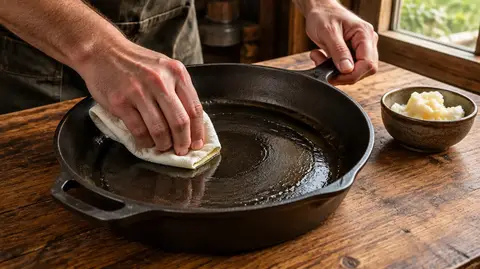
Using a lint-free cloth, wipe the tallow over the entire surface of the pan — inside, outside, handle, everything. Then — and this is the critical step — wipe it all off. Use a clean section of the cloth and wipe as if you are trying to remove every trace of the tallow.
You will not actually remove it all. A microscopically thin layer will remain bonded to the iron, and that is exactly what you want. Thick layers of fat do not polymerize properly. They turn gummy, sticky, and uneven. The most common mistake in cast iron seasoning is using too much fat.
Step 3: Bake at 450F for One Hour
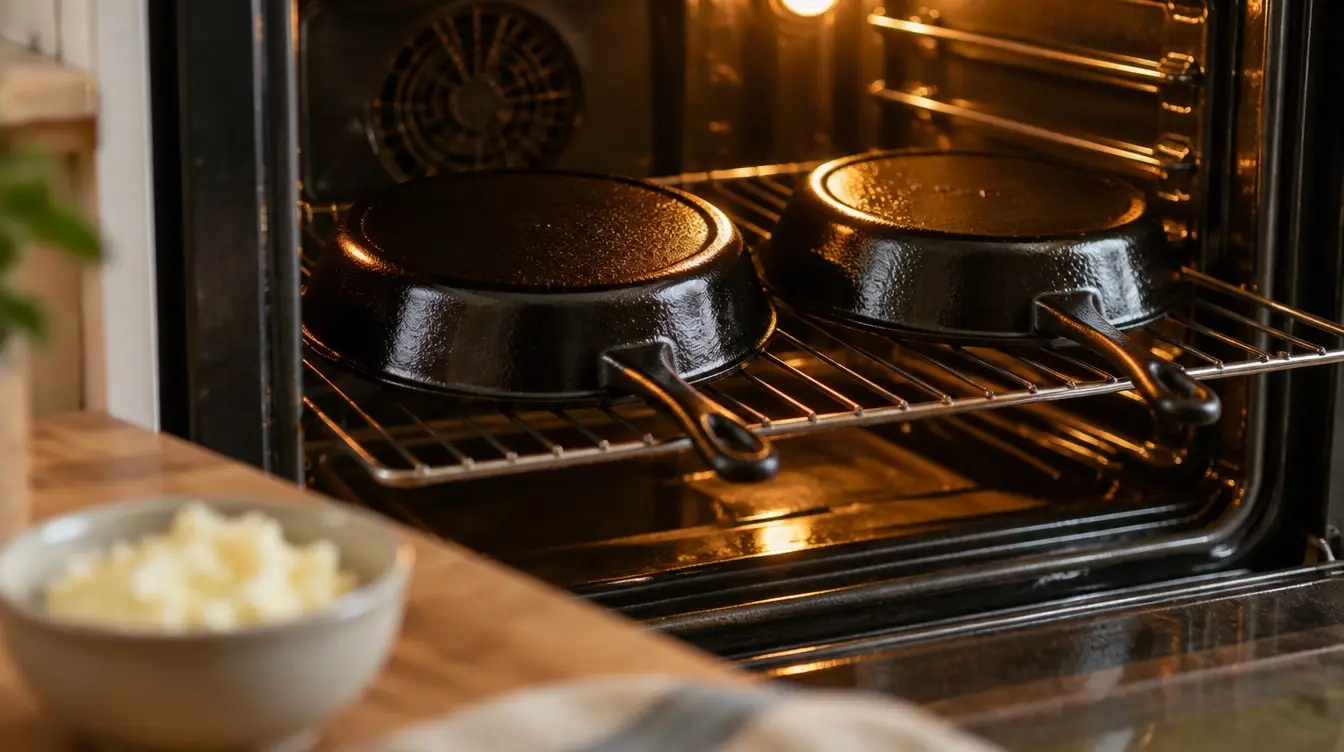
Place the pan upside down in a cold oven. If you are worried about drips, place a sheet of aluminum foil on the rack below.
Set the oven to 450F and let it preheat with the pan inside. Once it reaches temperature, set a timer for one hour.
During this hour, the tallow is polymerizing. It is breaking down past its smoke point and bonding to the iron at a molecular level. Your kitchen may smell faintly of beef tallow — that is normal. Open a window or turn on the vent if it bothers you.
Step 4: Cool in the Oven
When the hour is up, turn off the oven and leave the pan inside with the door closed. Let it cool completely — at least 2 hours, ideally overnight. Rapid cooling can cause the seasoning layer to crack or become uneven.
Step 5: Repeat 2 to 3 Times
One round of seasoning gives you a functional but thin layer. For a truly slick, non-stick surface, repeat the entire process — apply, wipe off, bake, cool — at least 3 times total. Each round builds on the last, creating a progressively harder and darker coating.
After three rounds, the surface should be noticeably darker (dark brown to black) and smooth to the touch. At this point, your pan is ready for cooking.
Tallow vs. Other Seasoning Fats
I have tried most of the commonly recommended seasoning fats. Here is how they compare to tallow in my experience.
Tallow vs. Flaxseed Oil
Flaxseed oil produces a beautiful, glass-like seasoning initially. It polymerizes well because of its high linolenic acid content. But it is brittle. After a few months of regular cooking, flaxseed seasoning tends to flake off in patches. It can also develop a rancid smell over time. Tallow’s seasoning is slightly less pretty but far more durable.
Tallow vs. Crisco (Vegetable Shortening)
Crisco is one of the most commonly recommended seasoning fats online, and it works fine. It is a vegetable shortening made from hydrogenated oils, which some people prefer to avoid in the kitchen. Tallow produces comparable results with a single, traditional ingredient. See our tallow vs shortening comparison.
Tallow vs. Lard
Lard and tallow are both traditional animal fats that work well for seasoning. Lard is a little more unsaturated, so it builds seasoning slightly faster; tallow is firmer and less prone to going stale on a stored pan. Both are good choices. If you already have lard, use it. Our tallow vs lard comparison covers the other differences.
Tallow vs. Canola Oil
Canola builds seasoning quickly and is what many cookware makers use, but it oxidizes readily, and a pan coated with too much of it and left unused can turn sticky. Tallow is less prone to that.
Maintaining Your Tallow-Seasoned Cast Iron
Good seasoning is not a one-time project. It is an ongoing relationship. Here is how to maintain it.
Cook with fat regularly. The best thing you can do for your cast iron seasoning is use the pan frequently with fat. Every time you cook with tallow, butter, or lard, you are adding micro-layers of seasoning. A well-used pan develops better seasoning than a carefully maintained but rarely used one.
Clean with hot water and a brush. A little dish soap is fine; it will not strip well-polymerized seasoning. Avoid soaking and the dishwasher. Scrub gently, rinse, and dry thoroughly.
Dry immediately and completely. Water causes rust, and rust damages seasoning. After washing, I put my pans on a burner over low heat for 2 minutes to evaporate any remaining moisture. Then I wipe on a thin coat of tallow while the pan is still warm.
Re-season as needed. If you notice dull gray patches, food sticking where it did not before, or visible rust spots, it is time for a round of oven seasoning. One round usually fixes minor issues. For major problems, strip and start over.
Do not cook acidic foods until the seasoning is well-established. Tomato sauces, wine reductions, and citrus-based dishes can strip thin seasoning. Wait until you have at least 5 to 6 layers of seasoning before cooking anything acidic in your cast iron.
For detailed information on tallow types and quality, our guide on identifying high-quality beef tallow covers what to look for.
Frequently Asked Questions
How many coats of tallow seasoning does cast iron need?
A minimum of 3 coats for a functional non-stick surface. For the best results, aim for 5 to 6 coats before putting the pan into regular service. Each coat should be baked at 450F for one hour with a complete cool-down between rounds. After that, regular cooking with fat will continue building the seasoning over time.
Is beef tallow good for seasoning cast iron?
Yes. It polymerizes into a durable layer when baked in thin coats at about 450°F, and cooking with it regularly keeps building the seasoning. It takes a few more coats than flaxseed or canola to build up, but the finish tends to be less brittle.
Can I use grass-fed tallow for seasoning cast iron?
Yes. Grass-fed or not makes little difference to the seasoning itself; what matters is clean, well-filtered tallow without bits of protein or water. The 4-pound grass-fed tallow is what I use for all my cast iron work because I cook with the same tub.
Why is my tallow seasoning sticky?
Two likely causes. Either you applied too much tallow before baking (the fix is to wipe off more aggressively), or your oven temperature was too low for proper polymerization (increase to 450F). Sticky seasoning is unpolymerized fat. You can fix it by wiping the sticky layer with a cloth dampened with a tiny amount of tallow, then re-baking at 450F for an hour.
Does beef tallow seasoning make food taste beefy?
No. Once tallow has polymerized into a seasoning layer, it is no longer fat in any functional sense — it has become a hard polymer bonded to the iron. It has no flavor contribution. Your eggs, pancakes, and everything else will taste completely normal.
How long does tallow seasoning last on cast iron?
With regular use and proper care, tallow seasoning lasts indefinitely. I have pans with tallow-based seasoning that is over three years old and still performing perfectly. The seasoning only degrades if the pan is neglected (rust), abused (metal utensils scraping aggressively, dishwasher), or exposed to prolonged acidic cooking.
Bottom Line
Beef tallow is one of the best fats you can use for seasoning cast iron. It polymerizes into a hard, stable, non-stick layer that holds up to daily cooking better than most alternatives.
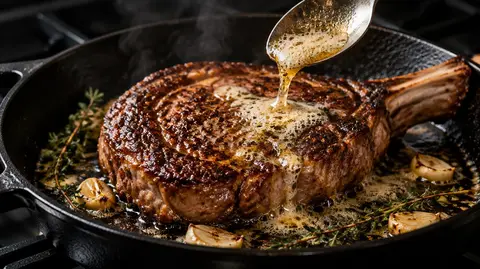
100% Pure Grass Fed Beef Tallow (4 lbs) is the best choice for most people. The rendering quality ensures clean seasoning, and the 4-pound size means you always have tallow on hand for both seasoning and cooking. If you only have a pan or two, a Fatworks jar is enough. Once your pan is seasoned, put it to work with a tallow-seared steak or see our best beef tallow for cooking roundup.
The technique is simple: thin layers, high heat, patience. Three rounds in the oven and your cast iron will be ready to fry eggs without a drop of sticking. Take care of the seasoning, and it will take care of you for decades.
Explore more tallow guides
Browse our collection of recipes, comparisons, reviews and DIY tutorials.
View all guidesKing Tallow is reader-supported. We research and test the products we recommend, and when you buy through links on this page we may earn a commission at no extra cost to you. See our affiliate disclosure.
Published · Last updated