Mutton Tallow vs Beef Tallow: What's the Difference?
Independent reviewMutton tallow vs beef tallow compared. Melt point, flavor, CLA content, traditional cooking uses, and skincare differences. Where to find each.

This post contains affiliate links. We may earn a commission if you purchase through these links, at no extra cost to you.
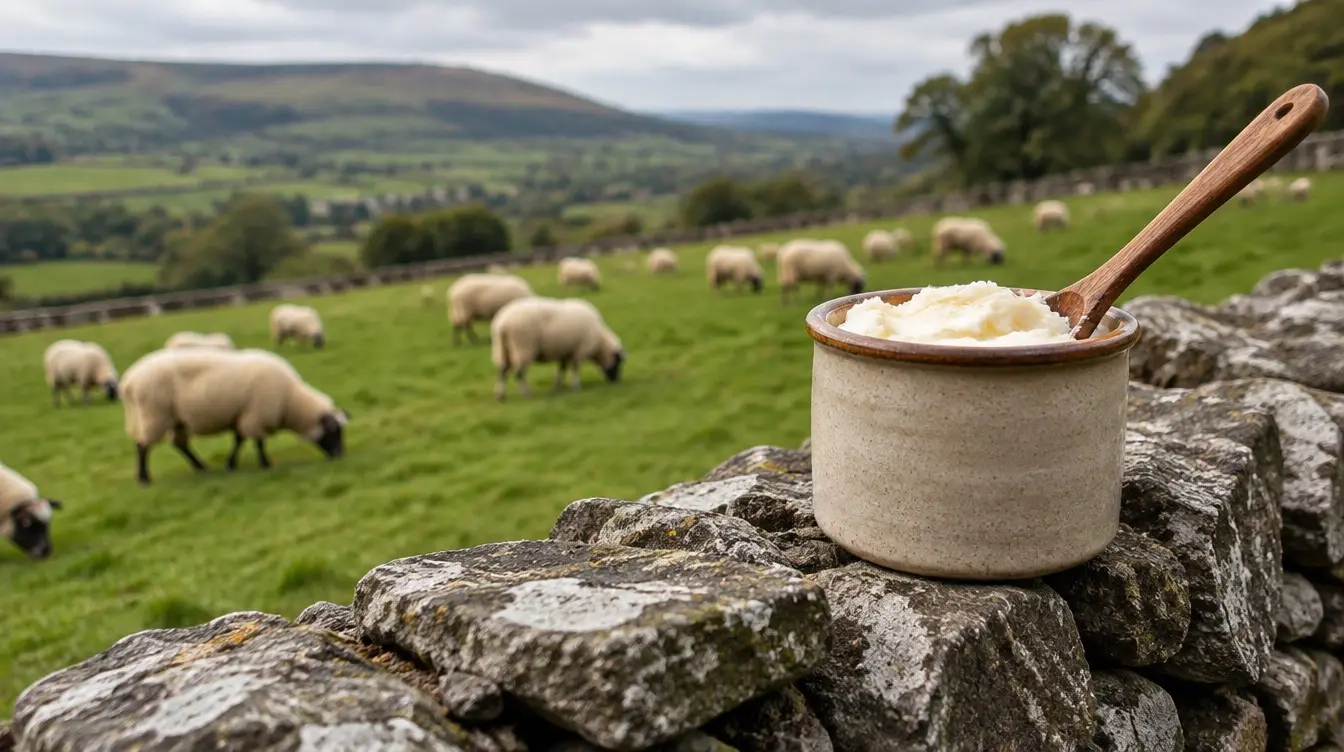
Most people in America have eaten beef tallow without knowing it (any restaurant that fried in animal fat before 1990 used it), but mutton tallow is a different animal in every sense. It is rendered fat from mature sheep. It has a higher melt point. It has a stronger, gamier flavor profile when poorly rendered. It is a staple in British, Welsh, and South Asian cooking traditions that never moved away from it the way American cooking did.
I rendered my first batch of mutton tallow about a year ago after a friend brought back lamb suet from a butcher who would not sell it to the general public. It was a different experience than rendering beef tallow. The kitchen smelled different (richer, more strongly mutton-forward). The finished product set up harder. The cooking applications were genuinely different from beef tallow in ways I did not expect.
This is a head-to-head on mutton tallow versus beef tallow covering the parts that actually matter: melt point, flavor, fatty acid profile, traditional cooking applications, where to find it, and whether it is worth the effort for skincare or daily eating.
Terminology First: Mutton vs Lamb Tallow
Quick vocabulary note before we go further. Mutton is meat from mature sheep, generally over a year old. Lamb is meat from sheep under a year old. The fat from each renders into a different product.
Mutton tallow is rendered from mature sheep fat. It is firmer, has a higher melt point, and carries the stronger flavor that people associate with sheep meat.
Lamb tallow is rendered from younger sheep fat. It is softer, milder in flavor, and closer to beef tallow in handling.
Both are sometimes generically called “sheep tallow” in commercial labeling. If you are buying from a small producer, ask which they are using. If you are buying from a large supplier, the label may not specify.
For most of this post, when I say mutton tallow I mean the mature-sheep variety. Where lamb tallow behaves meaningfully differently I will call it out.
Melt Point: Mutton Sits Higher
Beef tallow melts fully around 113F. Mutton tallow melts closer to 117F. That four-degree difference does not sound like much but it has real practical implications.
A higher melt point means mutton tallow stays solid at slightly higher ambient temperatures. In a hot kitchen in July, beef tallow can soften noticeably on the counter. Mutton tallow holds its shape better. This is part of why traditional Welsh cooks favored mutton tallow for puddings and pastry: it stayed firm enough to grate or crumble cold, even in warm conditions.
For deep frying, the higher melt point translates to a tallow that sets up faster on the cooled food. Fried fish in mutton fat has a crisper, drier exterior than the same fish fried in beef fat. The mouthfeel of British-style fish and chips fried in beef dripping is good. Fried in mutton or lamb dripping it is genuinely different and, for some palates, better.
For skincare, the higher melt point means mutton tallow stays slightly more occlusive at body temperature than beef tallow. It melts onto warm skin but holds together a bit more firmly, which can be useful for dry hand creams or heel balms but excessive for facial application.
Fatty Acid Profile: Sheep Has Slightly More Saturated, More CLA
Both fats are roughly half saturated, half unsaturated. Mutton tallow generally runs a touch higher in stearic and palmitic saturated fats and slightly lower in monounsaturated oleic acid, which is what produces the higher melt point.
The interesting difference is in conjugated linoleic acid (CLA). Sheep produce more CLA than cattle, per gram of fat. This is a function of rumen microbiology: sheep digestive systems are more efficient at the bacterial conversion of dietary linoleic acid into CLA. Grass-fed mutton tallow can run as high as 3% CLA by some measurements, compared to 1 to 2% in grass-fed beef tallow.
If you specifically care about CLA content (and the human evidence on CLA is preliminary, so I would not lean on this as a primary buying reason), mutton tallow comes out ahead. For most other nutritional considerations, the two fats are similar enough to be interchangeable.
Flavor: The Big Practical Difference
This is where mutton and beef tallow diverge most. Mutton tallow has a distinct flavor that some people love and some people cannot get past. The notes are gamier, more mineral, slightly sweet in a way that beef fat is not, and with a lingering sheep-y aroma that varies hugely by rendering quality.
Poorly rendered mutton tallow tastes like a barnyard. The off-flavors come from the same volatile compounds (skatole, indole) that give some lamb cuts the “muttony” taste people complain about. Good rendering at low temperature, with careful trimming of any connective tissue before melting, produces a clean, savory fat that tastes complex and savory rather than off.
Beef tallow, by comparison, is much more forgiving on the rendering side. Sloppy rendering of beef fat produces a still-pleasant beefy fat. Sloppy rendering of mutton fat produces something only the most enthusiastic sheep-meat eaters will use.
If you are new to mutton tallow, start with a commercial source from a reputable producer rather than rendering it yourself. The risk of producing inedible fat on your first attempt is real.
Traditional Cooking Uses
Mutton tallow has been a fixture of several cuisines for centuries.
British cuisine. Yorkshire puddings, pasties, suet puddings, and traditional roast preparations all used mutton or beef suet historically, with the regional preference often coming down to which animal was more available locally. Welsh and Scottish cooking leans more mutton-forward than English cooking. A spotted dick or treacle sponge with mutton suet has a flavor that is different from the beef-suet version: heavier, more savory underneath the sweetness.
South Asian cuisine. Mutton fat is the traditional cooking fat for biryanis in some regions, particularly in parts of Pakistan and northern India where ghee is supplemented or replaced with rendered sheep fat for high-heat applications. The flavor pairs with the spice profiles (cumin, coriander, cardamom) in a way that beef fat does not.
Middle Eastern cuisine. Various dishes in the Levantine and North African traditions use lamb fat (and sometimes mutton) as a cooking medium. Kawarma, the spiced preserved meat preparation, is essentially lamb cooked and stored in its own rendered fat.
French cuisine. Mutton fat is uncommon in modern French cooking but was historically used in cassoulet variants from regions with more sheep than pig farming. The classic version uses pork and duck fat, but sheep-region versions substituted mutton fat in places.
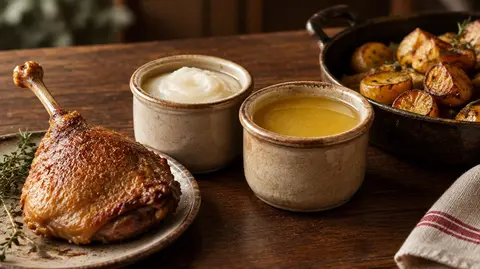
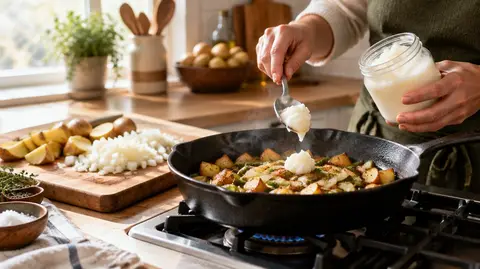
Where I have used mutton tallow at home: roasting potatoes with a rosemary-and-garlic finish, pan-frying lamb chops in their own kind of fat (which dramatically amplifies the flavor), and as a finishing fat for a slow-cooked North African stew with cinnamon and apricots. The pairing with lamb meat is the most natural use, the same way beef tallow pairs naturally with beef.
Where to Find Mutton Tallow
Here is the honest part. Mutton tallow is hard to find commercially in the United States. American consumer demand for sheep products is small enough that mainstream grocery distribution does not carry it. The most reliable sources are:
Direct from sheep farmers. Small-farm websites that sell whole lamb or mutton often have rendered fat as a side product. Lamb dripping is more commonly available than mutton dripping because the lamb meat market is larger.
Halal butchers. Markets that serve South Asian and Middle Eastern communities often have lamb fat or mutton fat for sale, sometimes already rendered and sometimes as raw suet that you render yourself.
Specialty butcher shops. Old-school butcher counters in larger cities sometimes carry it on request, particularly if they have a British or Irish customer base.
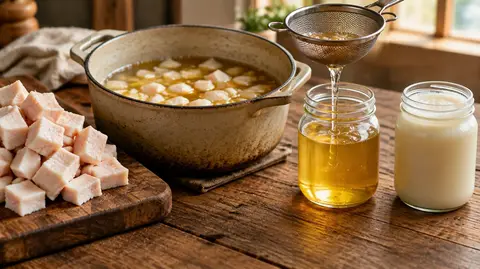
Render your own. A pound of lamb suet from a butcher costs about $3 to $5. Rendering it at home in a slow cooker takes a few hours and produces about 10 to 12 ounces of finished fat. The rendering process is identical to beef tallow rendering, with the same low-and-slow technique.
For practical purposes, if you want to experiment with sheep tallow without going through a sourcing odyssey, render lamb fat from a local butcher. The technique is the same as beef tallow rendering, which the home rendering guide walks through.
If you want to read more about lamb tallow specifically as a cooking and crafting fat, the lamb tallow page covers the broader landscape.
Skincare: Mutton Is More Occlusive
If you have ever read traditional folk-skincare manuals, mutton tallow shows up alongside beef tallow as a daily skin fat in pre-industrial European households. The two fats behave similarly on skin (both are structurally close to human sebum), but mutton tallow’s higher saturated fat content makes it slightly more occlusive.
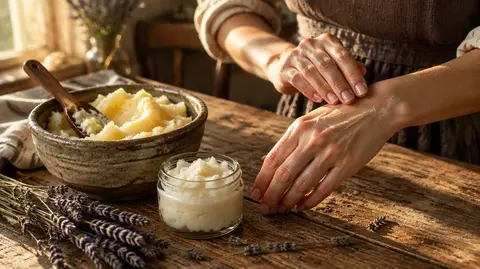
For very dry skin, cracked heels, eczema patches, and cold-weather hand protection, mutton tallow performs marginally better than beef tallow. The film it leaves on the skin is denser. The protection lasts a bit longer between applications.
For facial use, the higher occlusiveness can be a downside. Faces produce more sebum than other parts of the body and respond better to lighter, more easily absorbed fats. Beef tallow (or whipped beef tallow products like the Amallow unscented whipped balm) is the better choice for face. Mutton tallow is better suited to body, hands, and feet.
The scent question matters here too. Mutton tallow carries its sheep-y aroma into skincare. Even well-rendered batches have a faintly animal note that some people enjoy and others find off-putting. Beef tallow is much more neutral after the initial application. If you are sensitive to scent, beef tallow is the easier daily choice.
If you want a beef-tallow body balm with minimal additives, the Santa Cruz Paleo three-ingredient moisturizer is the closest beef-tallow equivalent to a traditional unscented mutton-tallow salve.
When to Choose Which
Choose beef tallow if:
- You want broad availability and reliable quality
- You want a more neutral flavor for cooking
- You are doing daily skincare on the face
- You are new to animal-fat cooking and want the forgiving learning curve
- You want the higher smoke point ceiling for deep frying (both work, beef is slightly more forgiving)
Choose mutton tallow if:
- You are specifically cooking lamb or mutton dishes (the flavor pairing is excellent)
- You want a traditional British or South Asian flavor profile
- You are making suet pastry or puddings in the British tradition
- You need a more occlusive body balm for very dry skin
- You want maximum CLA content (with the caveat that the human evidence is preliminary)
For most American home cooks, beef tallow is the practical default. Mutton tallow is a specialty fat worth keeping for specific applications.
Frequently Asked Questions
Is mutton tallow the same as lamb tallow?
No. Mutton tallow is from mature sheep. Lamb tallow is from younger sheep. Mutton tallow is firmer, more strongly flavored, and harder to find commercially. Lamb tallow is softer, milder, and slightly easier to source from butchers. The cooking applications overlap but the flavor intensity is different.
Why does mutton fat smell stronger?
Mature sheep accumulate more branched-chain fatty acids (mainly 4-methyloctanoic and 4-methylnonanoic acid) in their fat as they age. These are the source of the characteristic “muttony” aroma. Lamb fat has less of this. Castrated males have less of this than intact males. Female sheep have less of this than males. All of this affects how strong-smelling the rendered fat ends up being.
Can I substitute mutton tallow for beef tallow in any recipe?
You can, but the flavor will read differently. In neutral applications (roasting potatoes, frying eggs), the substitution works with a slight flavor lift. In delicate applications (cookies, mild custards) the mutton flavor will dominate in a way you probably do not want. In lamb-forward dishes, mutton tallow is actively better than beef tallow. Use your judgment based on the underlying recipe.
Is mutton tallow halal?
Yes, if the sheep was slaughtered according to halal practices. Mutton fat from a halal butcher is halal. Mutton fat from a non-halal source may not be. The same principle applies to kosher requirements.
Does mutton tallow have a higher smoke point than beef tallow?
Roughly the same, around 400F. The slightly higher melt point does not translate into a meaningfully higher smoke point. Both perform similarly for deep frying applications.
How long does rendered mutton tallow keep?
Like beef tallow, 12 months at room temperature in a dark cool place, 24 months refrigerated, and essentially indefinitely frozen. The higher saturated fat content actually makes mutton tallow slightly more shelf-stable than beef tallow at room temperature.
Bottom Line
Mutton tallow is a worthwhile specialty fat for anyone interested in traditional British, Welsh, or South Asian cooking, or for skincare applications that need maximum occlusiveness. Beef tallow is the more practical default for everyday American cooking and daily-driver skincare, and it is dramatically easier to source.
If you can get your hands on either lamb or mutton suet from a local butcher, render a small batch yourself to see if the flavor and behavior fit what you are cooking. For most readers, the right starting point is a 4-pound bucket of grass-fed beef tallow for cooking and the Traverse Bay 32 oz as a neutral deodorized backup, with mutton tallow as an occasional experiment when the cuisine calls for it.
For deeper context on sheep-derived fats specifically, the lamb tallow page covers the broader landscape. For the rendering technique that works across animal fats, the home rendering walkthrough is the starting point. The different cuts and fat sources guide covers the beef side of the same question, and the grass-fed comparison post covers the feeding-system differences that apply equally to sheep and cattle.
Explore more tallow guides
Browse our collection of recipes, comparisons, reviews and DIY tutorials.
View all guidesKing Tallow is reader-supported. We research and test the products we recommend, and when you buy through links on this page we may earn a commission at no extra cost to you. See our affiliate disclosure.
Published