Beef Tallow Melting Point: What Temperature Does Tallow Melt?
Reader-supportedBeef tallow melts at 113-120F slip point and 130-140F fully liquid. Why grass-fed melts lower, comparison table for fats, and what it means for cooks and DIY makers.

This post contains affiliate links. We may earn a commission if you purchase through these links, at no extra cost to you.
If you have ever pulled a jar of tallow out of the pantry on a hot afternoon and found it soft, or rendered a fresh batch and watched it sit liquid at room temperature for hours, you have run into the melting point question already.
Beef tallow does not have a single melting temperature. It has a slip point, a softening range, and a full-liquid point, and they all matter for different reasons depending on whether you are cooking with it, making candles out of it, or formulating a balm.
This is the short, useful reference I keep wanting to send people. The numbers, the reason grass-fed melts lower than grain-fed, a comparison table with other common fats, and the practical implications for the projects you are most likely to be working on.
The Three Numbers That Matter
When you melt a solid fat, it does not switch from solid to liquid the way water does at 32F. It softens gradually. The relevant temperatures are:
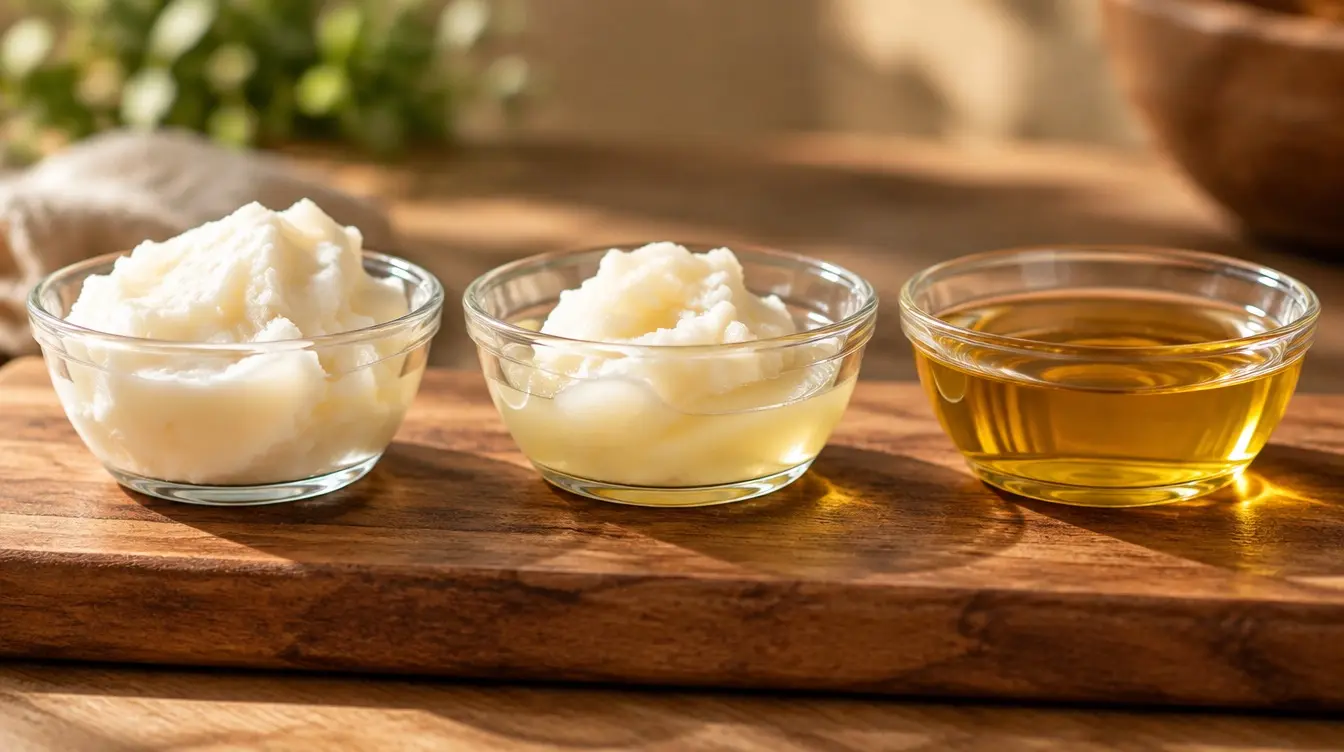
Slip point: 113F to 120F. This is the temperature at which the fat starts to give way under its own weight. A column of tallow in a test tube will begin to slide downward. The texture goes from firm to spreadable. This is the temperature where a tallow balm transfers easily to skin and where a refrigerated jar becomes scoopable.
Softening point: 120F to 130F. The fat is mostly soft but holds some structure. This is the working range for soap molding, candle pouring, and balm whipping. Above the slip point, well below full liquid.
Full melt: 130F to 140F. Fully liquid and clear. Pourable. This is the temperature you need to mix tallow into other liquid ingredients cleanly without it re-solidifying mid-pour.
For most grass-fed tallow, the full melt sits closer to 130F. For most grain-fed tallow, closer to 140F. The difference is small but consistent.
Why Grass-Fed Melts Lower
The melting point of any fat is set by its fatty acid composition. Saturated fats have higher melting points. Unsaturated fats have lower melting points. The more unsaturated fatty acids a fat contains, the lower its melt.
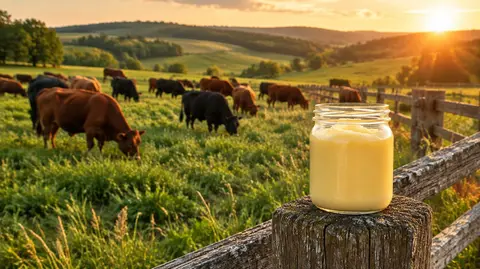
Grass-fed beef tallow contains more unsaturated fatty acids than grain-fed. The cattle are eating fresh forage, which is higher in alpha-linolenic acid and other unsaturated precursors. Their fat tissue reflects this. The result is a slightly softer fat at room temperature and a slightly lower full-melt point.
Grass-fed tallow runs roughly 52% saturated. Grain-fed runs roughly 55% saturated. That three-percentage-point gap is what gives you a few degrees of melting point difference.
For the broader nutritional picture, the beef tallow nutrition facts piece covers the full fatty acid breakdown. The calories and macros piece has the per-tablespoon numbers if you are tracking intake.
Comparison Table
How tallow stacks up against the other fats you might be working with.
| Fat | Slip Point | Full Melt | Saturated % |
|---|---|---|---|
| Beef tallow (grass-fed) | 113F | 130F | ~52% |
| Beef tallow (grain-fed) | 117F | 140F | ~55% |
| Lard (pork) | 95F | 115F | ~40% |
| Butter | 90F | 95F | ~63% |
| Coconut oil | 76F | 78F | ~87% |
| Cocoa butter | 88F | 96F | ~57% |
| Beeswax | 144F | 147F | n/a |
| Palm oil | 95F | 110F | ~50% |
| Duck fat | 95F | 113F | ~33% |
A few things stand out from this table. Tallow has the highest full-melt of the common cooking fats other than beeswax. That makes it the most stable for hot-weather pantry storage and the most likely to need real heat for blending into balms or candles. Butter, lard, and coconut oil will all be soft at body temperature. Tallow stays firmer longer.
The tallow vs lard comparison covers the practical kitchen implications of that 15F to 25F gap. The tallow vs butter for cooking piece covers the high-heat side.
What This Means If You Cook
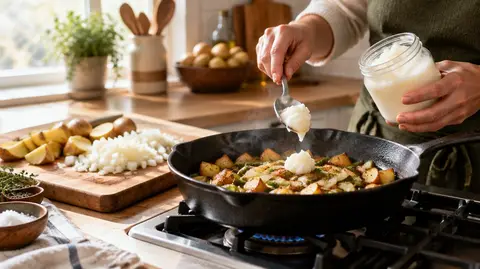
For cooking, the melt point matters most when you are working with cold tallow. A spoonful of solid tallow tossed into a cold pan needs about 90 seconds to fully liquefy and shimmer at medium heat. Cold tallow on a hot pan liquefies in three to five seconds. Neither is a problem. Just pace your prep accordingly.
For frying, the melt point is irrelevant once you are at temperature. You are running the fat at 350F to 375F, well above anything that touches the melt range.
For finishing dishes (basting a steak, drizzling on vegetables, mounting a sauce), the melt point matters because tallow that hits a 100F serving plate will start to re-solidify before the dish reaches the table. Pre-warm plates if you are using tallow as a finishing fat.
What This Means If You Make Candles
Candles need a tallow that pours fully liquid into a mold and sets up firm at room temperature. The full melt at 130F to 140F is workable but on the soft side for a candle that will sit in a warm room.
Most candle makers blend tallow with beeswax to push the working temperature up. A 70/30 tallow-to-beeswax blend will pour at 145F to 150F, set firm at room temperature, and hold its shape in a sunny window where pure tallow would slump.
For pillar candles specifically, a higher beeswax percentage is necessary. The candle making guide covers the ratios in detail.
What This Means If You Make Soap
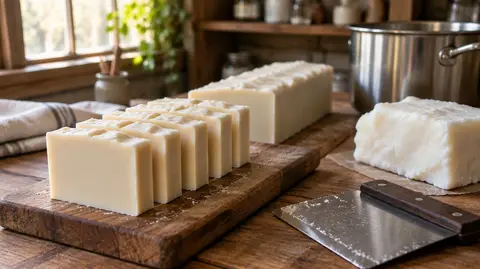
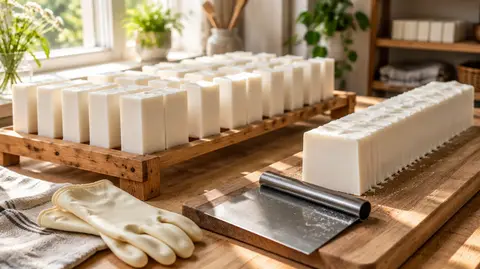
Soap making uses tallow as the saturated fat backbone. The full-melt at 130F to 140F is convenient because most cold-process soap recipes call for combining oils at around 100F to 120F. Tallow can be melted gently to about 135F, then blended with the liquid oils, and the mixture will hold at the working temperature long enough to add lye and trace.
Grass-fed tallow with its lower melt point gives a slightly softer bar of soap. Grain-fed gives a harder bar. For most all-purpose recipes the difference is minor. For shaving soap or laundry bars where hardness matters, grain-fed is the easier choice.
The homemade soap and balm overview is the starting point if you have not made soap before.
What This Means If You Make Balms
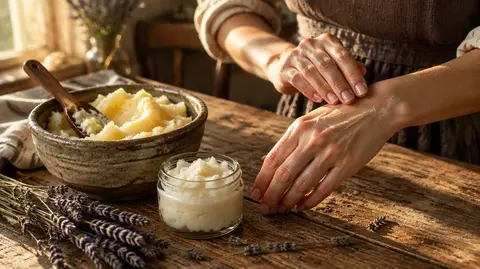
Balms are where the slip point matters most. A balm that softens at body temperature spreads easily on skin. A balm that needs hot fingers to scoop is annoying.
Pure tallow balms slip around 113F to 120F. That is above body temperature (98.6F). You will need to warm the balm slightly with your fingers before it spreads. Most commercial tallow balms blend a small amount of a softer fat, often a few percent of olive oil or jojoba, to lower the working slip point closer to body temperature.
If you are making your own, the recipes at the body butter post and the skincare overview include the small-percentage carrier oil additions that make the texture work.
For DIY base tallow, Traverse Bay Farms (32 oz) is the deodorized, neutral jar I keep on hand for skincare projects specifically. For larger projects or for households that cook with tallow too, 100% Pure Grass-Fed Beef Tallow (4 lbs) is the better per-ounce buy.
Quick Melt Method
To melt tallow from solid for any project:
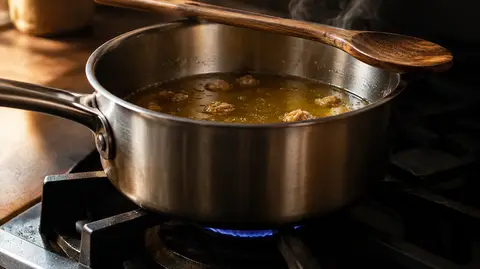
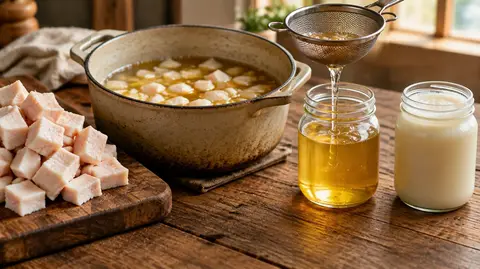
Pull the amount you need into a heatproof bowl. Set the bowl over a saucepan with an inch of simmering water. The water bath holds the temperature at 212F, which is well above the full-melt point but below anything that would scorch the fat. Stir occasionally. Tallow will be fully liquid in 8 to 12 minutes for a typical balm-sized batch.
Avoid melting tallow on direct stovetop heat unless you are paying close attention. Tallow can scorch at the base of a pan even when the bulk of the fat is still solid, because the bottom layer hits the metal first. A double boiler is foolproof.
Microwave melting works but the texture often comes back uneven, with hot spots that separate slightly when the fat resolidifies. Use 50% power and 30-second intervals if you go that route.
Frequently Asked Questions
Why is my tallow soft at room temperature?
Two possibilities. One, your room is above 75F and any tallow will soften past that. Two, your tallow is from grass-fed cattle or a leaner cut and naturally sits closer to its slip point at lower temperatures. Refrigerate if you want a firmer texture for scooping.
Will tallow melt in a hot car?
Yes, easily. A closed car in summer reaches 130F to 150F in interior temperature. That is past the full melt point. A jar of tallow left in a car will liquefy. It will resolidify on cooling but the texture may be uneven and the surface may separate. Move tallow out of the car as soon as you can.
Does melting and resolidifying damage the tallow?
No. A single melt and resolidify cycle does not affect the nutritional or cosmetic properties. Repeated cycles with exposure to air will slowly oxidize the surface, which is why a jar that has been melted multiple times often develops a slightly yellow surface layer. Stir the surface back into the bulk on remelting.
Can I lower the melting point of tallow?
By blending with a lower-melting fat. Adding 10% to 20% olive oil, jojoba, or argan oil will lower the working slip point closer to body temperature. This is the standard move for balms and skincare. For cooking, you can blend tallow with butter or duck fat for the same effect.
What temperature do I need for soap making?
130F to 140F for melting the tallow, then cooled to 100F to 110F for combining with lye solution. Grass-fed tallow at the lower end of the range, grain-fed at the higher.
Bottom Line
Beef tallow slips around 113F to 120F and fully liquefies between 130F and 140F, with grass-fed tallow running a few degrees lower than grain-fed because of its slightly higher unsaturated fatty acid content. That puts it firmly in the middle of common cooking and crafting fats, with a higher melt than butter or lard and a lower melt than beeswax.
For most projects, the 130F to 140F full-melt range is the number to plan around. Heat gently in a double boiler, work fast once liquid, and let the fat do its job.
Explore more tallow guides
Browse our collection of recipes, comparisons, reviews and DIY tutorials.
View all guidesKing Tallow is reader-supported. We research and test the products we recommend, and when you buy through links on this page we may earn a commission at no extra cost to you. See our affiliate disclosure.
Published